Traveling through Patagonia for the first time and having the chance to tour the classic corners of this beautiful environment is a magical experience. Among everything there is to do is the tour of the Route of the 7 Lakes (Ruta de los 7 Lagos), one of the most famous in all of southern Argentina. This section of National Route 40 connects the cities of Villa La Angostura and San Martín de los Andes, in the province of Neuquén, along about 110 kilometers of unforgettable landscapes. Along the way, seven mirrors of water of different shades of blue, turquoise, and green follow one another, surrounded by forests, rivers, snowy mountains, and natural trails that are part of the heart of Nahuel Huapi National Park and Lanín National Park. Can you imagine? And it gets better.
The fame gathered by the Route of the 7 Lakes is not only due to the beauty of its landscapes but also to the possibility of traveling that stretch of the road with freedom and calm, stopping at viewpoints, beaches, or campsites in front of the different lakes. It is undoubtedly one of the most sought-after experiences by those traveling to southern Argentina to connect with nature, engage in physical activity, meet people, and have a lot of fun.
activities and Tours of the Route of the 7 Lakes
Best Bariloche Tours offers one of the most complete experiences to travel through the Route of the Seven Lakes from San Carlos de Bariloche to San Martín de Los Andes. The tour departs early in the morning and heads towards Villa La Angostura, where a brief stop is made to tour the center and see some of its most picturesque corners.
Then, the trip continues along National Route 40 crossing the seven main lakes. Along the way, the group makes strategic stops at viewpoints and panoramic points ideal for taking good photos and enjoying the natural environment. The tour includes the possibility of seeing lakes Espejo, Correntoso, Villarino, Falkner, Machónico, and Lácar up close, among others.
In addition, during the excursion, a specialized guide provides information about the natural environment and the history of the region, enriching the experience with cultural and environmental data. Upon reaching San Martín de los Andes, passengers have some free time for lunch, walking along the Lake Lácar waterfront, and getting to know the city center. In the afternoon, the tour begins the return to Bariloche, completing a day of majestic landscapes and learning.
This proposal is ideal for those with little time or who prefer to enjoy the trip without worrying about driving or planning the itinerary. In addition, the accompaniment of local guides guarantees a safe and enriching experience, with the possibility of discovering details and viewpoints that might go unnoticed on a self-guided tour.
Where is it and How to Get to the Route of the 7 Lakes
The Route of the 7 Lakes is located in the south of the province of Neuquén and is part of the famous National Route 40, Argentina's tourism backbone. The best-known stretch begins in Villa La Angostura and ends in San Martín de los Andes, although many travelers integrate it into a larger circuit that includes San Carlos de Bariloche, in the province of Río Negro, as it is one of the most popular destinations in the region. From Bariloche to Villa La Angostura, there is a distance of about 80 kilometers, covered in just over an hour on a fully paved road in excellent condition.
It is key to know that the Route of the 7 Lakes tour can be done in both directions: from south to north (Bariloche – Villa La Angostura – San Martín de los Andes) or vice versa. The route is completely paved and well-signposted.
For those who do not have their own transport, there are different alternatives. The most comfortable ones are renting a car in Bariloche or hiring a guided excursion with transfer included. There are also bus and transfer services connecting both cities, although in this case, stops are limited to the main route, and internal roads leading directly to lakes and viewpoints cannot be accessed. That is, you can ask the driver to drop you off at one of the stops connecting to campsites and lakes, but the service is not hop-on-hop-off, so once you get off, you won't be able to board another bus from the same company at another time of the day. Tickets are for travel between one city and the other.
Another way to live the experience is by bicycle. Many tourists choose to cycle the Route of the 7 Lakes, especially in the direction from Villa La Angostura to San Martín de los Andes, as there are fewer steep slopes, and the pedaling is less demanding. In both cities, there are bike rental agencies offering full equipment and technical assistance, making it an increasingly popular option to enjoy the route at another pace, with the freedom to stop at any point along the way.
What are the Seven Lakes?
The name of the route refers to the seven lakes accompanying the road between Villa La Angostura and San Martín de los Andes: Espejo, Correntoso, Escondido, Villarino, Falkner, Machónico, and Lácar.
Starting from San Martín de los Andes, located on the shores of Lake Lácar, the first lake presented is Machónico to the west. Further on are lakes Falkner, on the left bank of the route, and Villarino on the right. The latter pours its waters into the former through the river of the same name. The next lake is Escondido, of a striking turquoise color, hidden among dense forests. Lake Traful is to the east if you follow the route towards Villa Traful. The next lake is Correntoso. Then crossing the Ruca Malén River, 15 kilometers away is Lake Espejo.
Further on at the junction with National Route 231, you can cross to Chile through the Cardenal Samoré international pass. A few kilometers further, you begin to border Lake Nahuel Huapi until reaching Villa la Angostura. However, there are more lakes and rivers to enjoy parallel to the "official" ones, such as Lago Hermoso, which also has campsites and cabins to spend the afternoon or sleep overnight. All are surrounded by beautiful landscapes and are suitable for a fresh swim.
Route of the 7 Lakes: Characteristics of Each One
Likewise, each lake on the route has its own charm. For example, Lake Espejo (Mirror Lake), known for the perfect reflection of mountains and forests on its surface; on clear and windless days, its water is even clearer, and the landscape invites taking the most impressive photos of Patagonia. A few kilometers away is Lake Correntoso, one of the most visited in the area for its wide beach, ideal for sunbathing and swimming, and for being the point where the Correntoso River is born. From there, activities such as sport fishing, kayaking, or simply enjoying an afternoon of mates and sandwiches in front of the vastness of the landscape can be practiced.
Further on, Lake Escondido seems to hide among the forest trees; smaller and quieter, ideal for stopping to observe it from a viewpoint and resting in silence. Then appears Lake Villarino, surrounded by mountains covered with lengas and coihues. It is a favorite for fishermen seeking rainbow and brown trout in its cold, crystal-clear waters. The campsite there is rustic, meaning it has no services like bathrooms, pantries, or security, but, as a benefit, entry and overnight stays are free. Of course: rules to care for the environment (do not light fires, do not leave trash, etc.) are also present. Next to it is Lake Falkner, with beach areas and a private campsite very close. Note: this is one of the places most frequented by young people to organize outdoor parties, so it is usually not a quiet area at night for full rest.
Continuing north, Lake Machónico surprises with its intense turquoise color and viewpoints allowing some of the best panoramic views of the tour. Finally, the road descends to Lake Lácar, marking the arrival in San Martín de los Andes. Its main beach, located right in the city center, is a meeting point for both locals and tourists, especially during summer when temperatures invite swimming and resting by the lake.
What is the Best Time to Travel the Route of the 7 Lakes
The Route of the 7 Lakes can be traveled year-round, but each season offers a different experience. In summer, between December and March, days are long, temperatures pleasant, and lakes reach their maximum splendor. It is the ideal time for camping, swimming, kayaking, or hiking/biking the trails.
In autumn, the landscape becomes more photogenic than ever: trees change color, and reflections in the water create a magical atmosphere. Meanwhile, temperatures remain warm during the day, but at night they can drop quite a bit, inviting you to layer up like an onion.
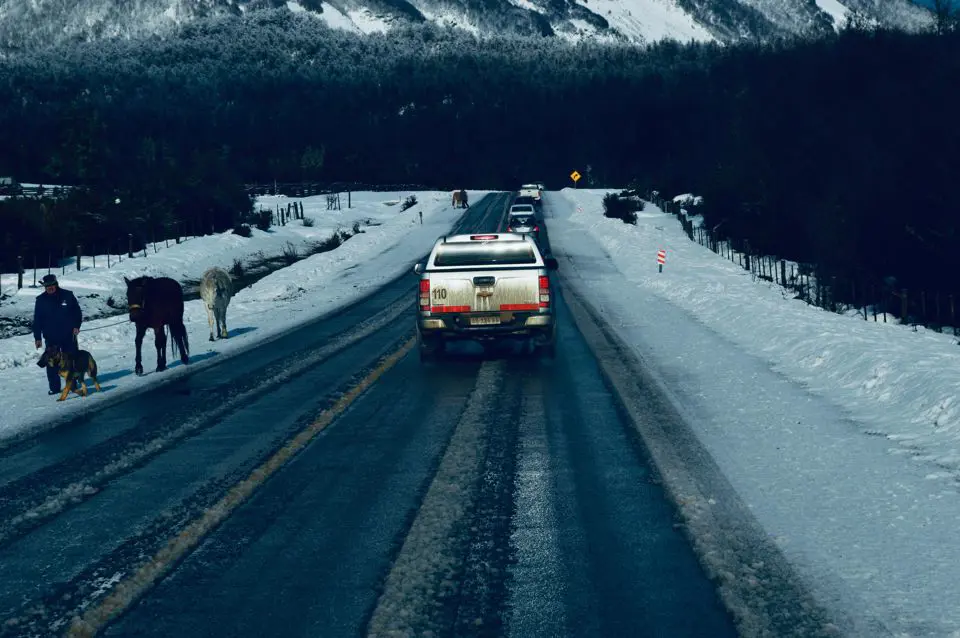
During winter, snow covers the peaks, and the road becomes somewhat more hostile. Although temperatures can be low, the route remains passable and is a good opportunity for those who enjoy tranquility, as there are fewer tourists. Spring, for its part, is the time when shrubs bloom and forest colors renew, with temperate days ideal for those seeking a balance between good weather and few crowds.
Where to Sleep: Campsites, Cabins, and Shelters
Along the Route of the 7 Lakes, there are numerous campsites and rest stops allowing you to enjoy nature without giving up comfort. Many of them are located facing the lakes and offer plots with grills, fire pits, bathrooms, and supply stores. Some even have cabins or dorms for those preferring to avoid tents.
The largest campsites are usually in the areas of Falkner, Espejo, and Hermoso lakes, with basic services but in harmony with the environment. In all cases, it is recommended to respect environmental conservation rules: do not leave waste, avoid making fire outside permitted spaces, and respect the silence of the place. The complexes do not have garbage collection service, so visitors must take everything they generate with them. In addition, electricity and hot water services are usually available only during daytime hours to reduce energy impact.
For those preferring a more comfortable option, both Villa La Angostura, San Martín de los Andes and Bariloche have a wide range of accommodations ranging from hotels, cabins, and houses. Spending the night in one of these destinations and dedicating the next day to exploring nearby lakes is a good way to balance rest and adventure.
Practical Tips for the Trip
Planning the route in advance helps make better use of time. Those with their own transport are recommended to travel with a full tank, as there are no gas stations along the entire route. It is also advisable to bring drinking water, sunscreen, mosquito repellent, toilet paper, warm clothes, and some food, especially if planning to stop for hikes or spend the day at one of the lakes.
Cell phone signal is intermittent, so it is advisable to download maps or use offline applications. In high season, especially between January and February, traffic can be more intense, so it is ideal to leave early to travel without haste and find good places to stop. If traveling by bicycle, it is recommended to do so in a south-to-north direction, that is, from Villa La Angostura to San Martín de los Andes, because the terrain presents fewer steep slopes and is more comfortable for pedaling.
Published by Has Chacon on 08/06/2026