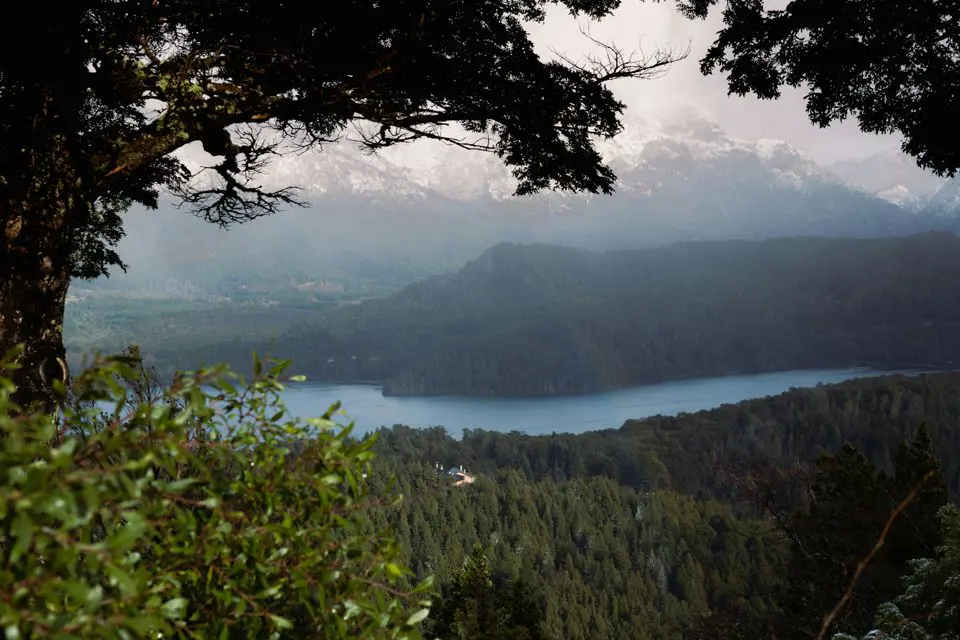
When one thinks that surprises came to an end in Bariloche, a new natural treasure appears to prove the opposite. Less known than the popular beaches and bays where hundreds of tourists and locals flock every summer to cool off and sunbathe, there is a paradise of turquoise waters immersed in the middle of the Nahuel Huapi National Park forest captivating adventurous travelers. These are the pools (pozones) of the Río Manso, a destination relatively close to the famous Río Negro city still preserving that wild and uncrowded spirit making it special for visitors in search of authentic nature.
Those on vacation in Río Negro or making a getaway in Bariloche and wanting to enjoy an afternoon near the water cannot miss this destination located just 70 kilometers south of Bariloche, about two hours by car, and 50 kilometers north of El Bolsón.
The Manso River is the southern limit of Nahuel Huapi National Park and is located almost at the limit with the Argentine-Chilean border. For this reason, many visitors take advantage of the ride to cross the mountain range and visit Chile.
Getting to the Manso River, where there are campsites to spend an afternoon or stay overnight, is very simple, as besides being close to Bariloche, and accessed via the mythical National Route 40, there are many options available for transfer.
tours to Río Manso
If none of the above indications works for you, there is another option guaranteeing comfort, safety, and attractions: organized excursions. With Best Bariloche Tours, you can find different proposals combining the Manso landscape with adventure, lunches, mountain biking, rafting, or sport fishing. They are ideal for those who do not want to drive, or those seeking to know the valley with specialized guides, or those more enthusiastic about doing planned activities.
One of the most complete experiences is the Lakes and Río Manso Tour with Private Lunch, touring part of Nahuel Huapi National Park visiting iconic lakes like Gutiérrez and Mascardi before entering the Manso valley. The excursion includes transfers, the accompaniment of an expert guide, and a lunch specially prepared in a privileged natural environment. It is perfect for those wishing to enjoy the landscape without haste and combining different lake and mountain environments.
Another proposal is the Mountain Bike outing through the Río Manso Walkways. This private excursion covers about 22 kilometers by bicycle on rural roads, crossing a suspension bridge and advancing through forests and river beaches. The ride includes necessary equipment, guide, picnic-style lunch, and insurance. It is an intermediate option, accessible for people with moderate physical condition wishing to incorporate physical activity and adventure.
Sport fishing is another of the Manso's great attractions, famous for its transparent waters and the presence of rainbow and brown trout. Best Bariloche Tours runs full days of fly fishing on specially designed rafts, allowing access to more remote sectors of the valley. Guides provide all equipment, plus meals and technical assistance. For those seeking an even more varied experience, there is also the Fishing Excursion on Río Manso, Lake Hess, or Lake Los Moscos, offering the possibility of alternating between different water bodies depending on the season, weather, or fisherman's experience level.
Finally, the star activity for adrenaline lovers is Rafting on Río Manso to the Border. This descent combines gentle stretches with class III and IV rapids, traversing canyons, native forests, and hidden beaches. The excursion includes the advice of a professional guide, kayak and navigation equipment, and an unforgettable journey to the border landmark with Chile. It is an ideal experience for those seeking a mix of excitement, nature, and an epic closing.
Visit Río Manso by Car
The most comfortable option is always to move in your own or rented car. Those with that possibility have to know that from downtown Bariloche there is a distance of 70 kilometers to the valley entrance, where the National Gendarmerie detachment and the bridge over the Villegas River are located. At that point begins Provincial Route 83: a gravel road accompanying the course of the Manso for about 40 kilometers south, until reaching the international border with Chile.
The journey takes about two hours to the border and is very beautiful to contemplate the Patagonian landscape. The route advances between farms, forests, hills, and crystal clear water beaches. As you advance into the valley, the landscape becomes more closed and humid, characteristic of the Valdivian rainforest. Although it is an accessible route, it is advisable to go slowly: there are winding and gravel sections.
One of the favorite stops for visitors are the pozones (pools), located just one kilometer from the confluence with the Villegas River. The water forms deep pools of intense light blue, ideal for a dip (Watch out! The water is very cold) or to watch how it runs at great speed (because, despite the name "Manso" meaning gentle, the river has nothing gentle about it). To access this point, you can park for an accessible cost and then walk two kilometers along well-marked trails until reaching the pools.
If the plan is to spend the day, there is space for picnics, plots with fire pits, shaded areas, and several nearby campsites—some managed by native communities—allowing extending the stay. It is fundamental, as always within the park, to circulate on authorized trails, avoid making fire outside marked sites, and return with all waste.
For those looking for an extra touch of adventure, the end of the road proposes something unique: a walk of just a thousand meters connecting with El León, a small town on the Chilean side where families of mountain tradition live. The crossing requires doing migrations at the Gendarmerie detachment, but the experience of walking between both countries in a completely natural environment is one of the Manso's greatest attractions.
Río Manso by bus
If there is no car, it's okay. You can also visit Río Manso by long-distance bus with companies traveling National Route 40. You get off at the Río Villegas stop, located on the route, and from there walk about 4 kilometers to the pools. It is an ideal option for backpackers and groups of friends with tighter budgets and a lot of adventurous spirit. The fourth alternative, less recommended for safety reasons but useful for some, is hitchhiking (hacer dedo) from the bridge so that some car with one or more empty seats takes you to the pools.
Upon arriving at the pools area, the dynamic is similar to those traveling by car: access to the premises is paid, you can spend the day, swim in the pools, and continue walking towards other sectors of the river.
For those planning to do the tour this way, we recommend contemplating how to face the return, as buses do not stop en route to pick up passengers. However, many travelers combine this experience with hitchhiking, hoping some car driver takes them to downtown Bariloche or the nearest point. As always, it is advisable to bring water, warm clothing, sun protection, and notify someone about the planned route.
Published by Has Chacon on 08/06/2026